Dandelion Root: The Bitter Balancer
The coffee adjacent brew that supports the liver you forget you have.

Roasted Dandelion Root
The lawn weed whose roasted root brews dark enough to stand in for coffee, and helps you digest the meal it follows.
Please note: The information here is for general education and isn't medical advice.
Roasted dandelion root (Taraxacum officinale) is one of the few caffeine-free brews that stands in convincingly for coffee: dark, bitter, and grounding, with a roasted depth that lands close to the real thing. The humble weed that colonizes lawns has a long history as food and medicine, and its common name carries that history. "Dandelion" is a worn down English version of the French dent de lion, lion's tooth, named for the jagged edge of its leaves. In Chinese medicine the same plant is pú gōng yīng, used to clear heat rather than to make coffee. Every part is usable, but it's the root, roasted until fragrant, that has been brewed as a coffee substitute since the days when coffee itself was scarce or rationed. It also happens to be a traditional bitter tonic for the liver and digestion.
How It Works
Two things are working here, on different timescales. First, the bitterness: bitter compounds in the root stimulate bile production and gastric secretions, which aid the digestion of fats. This is the classic action of a "bitter," where the taste itself triggers the digestive cascade before the food even arrives, and it's part of why the cup sits so well after a meal or first thing in the morning. Beneath that is inulin, a prebiotic fiber the root is rich in, which feeds beneficial gut bacteria. That's a benefit that builds over weeks rather than landing in a single cup. Together, the bitters and the inulin make dandelion less of a stimulant and more of a supporter. It doesn't push the system; it helps it run smoothly.
The Morning Alternative
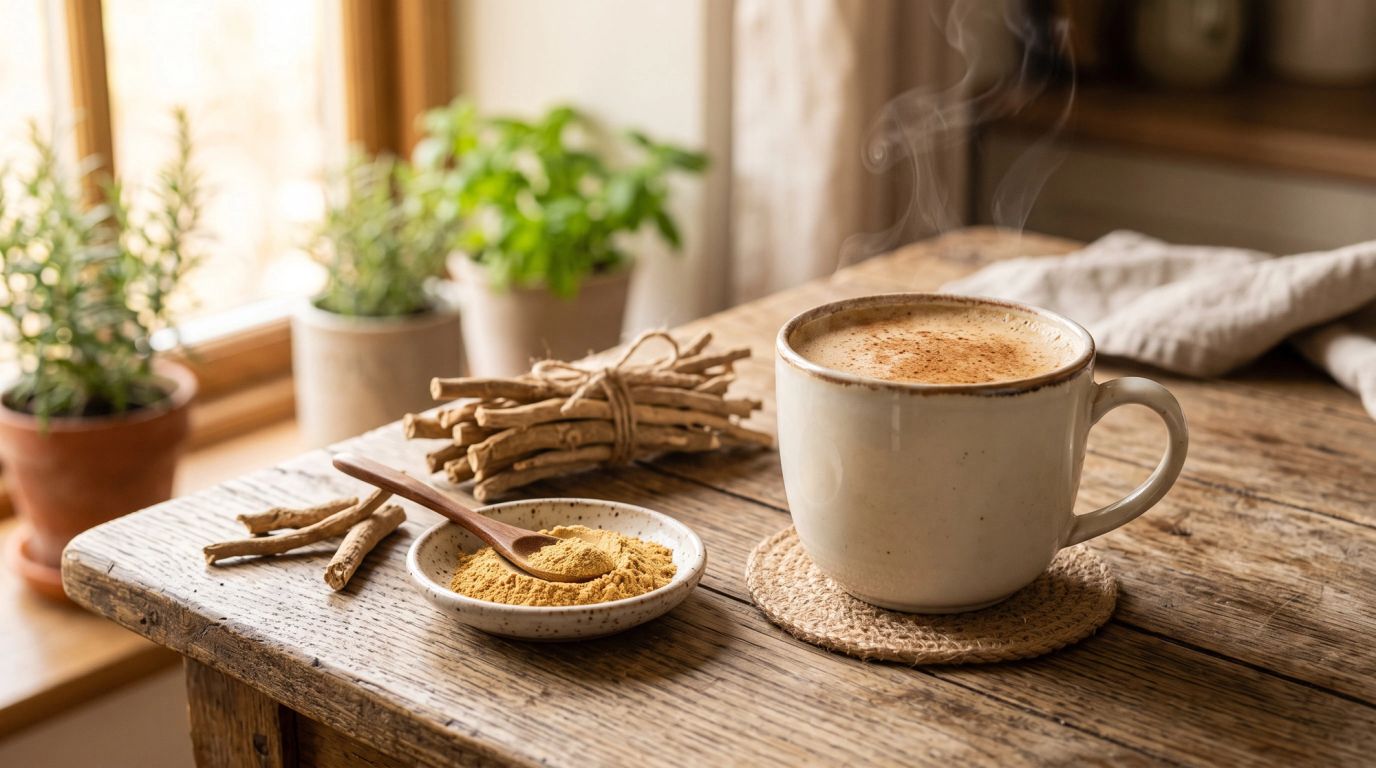
Simmer one tablespoon of roasted root in 12oz of water for 8 minutes. Because this is a root and not a leaf, it needs that sustained simmer rather than a quick steep to draw its compounds out. Strain, and finish with a splash of oat milk, which softens the bitterness into something closer to a latte. It's best on the days you want warmth and ritual without the jolt, or in the afternoon, when a real coffee would cost you the evening's sleep. If you want it rounder and even more coffee-like, blend the roasted root with roasted chicory, its classic companion in the cup. Both are roadside plants most people pull up and bin, the same underestimated-weed story as nettle.
A gentle note
Dandelion is genuinely active, which is the whole point and also the reason for care. Its bitter, bile-stimulating, and mild diuretic effects mean it can interact with medications and conditions. It's best avoided if you have gallstones or a blocked bile duct, and anyone taking diuretics, lithium, or blood-sugar medication should know it may nudge those in the same direction. It belongs to the same plant family as ragweed, so if that's an allergy of yours, go slowly the first time. If you're pregnant or nursing, on prescription medication, or managing a condition, check with a qualified provider before making it a daily habit.
From the Steep Shelf
A few tools, teas, and staples we use (or would use) to support the ideas in this article.
Some links on this page are affiliate links. If you buy something through them, we may earn a small commission at no extra cost to you. We only recommend products we have used or genuinely believe in.
Written by
Staff Writers
Staff writers and partners collaborate on stories.
Continue reading

Masala Doodh: The Spiced Milk Tradition
Warm spiced milk that has been part of Indian households for generations.
Ashwagandha: The Stress-Buffer Root
A cornerstone of Ayurveda that has quietly earned some of the strongest adaptogen data in modern science.

Nettle: The Everyday Mineral Tonic
The roadside 'weed' that quietly outperforms most greens powders on the market.