Masala Doodh: The Spiced Milk Tradition
Warm spiced milk that has been part of Indian households for generations.
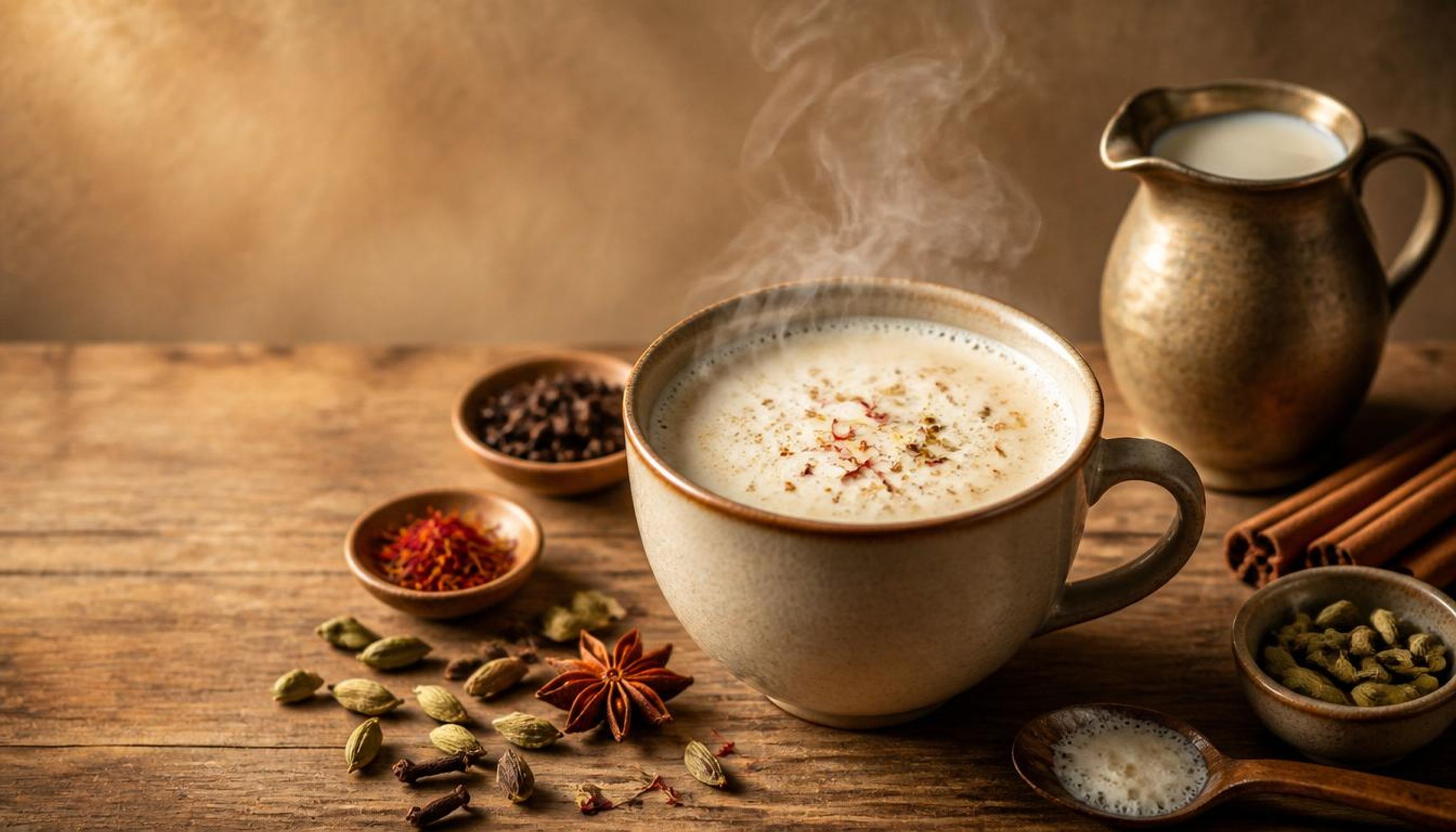
Long before "moon milk" appeared on wellness feeds, there was masala doodh, warm spiced milk that has been part of Indian households for generations. It's made by infusing warm milk with a homemade blend of spices and nuts, and its roots run through both everyday life and festival ritual. Fittingly for anything called a "moon" milk, the most cherished occasion for it is Kojagiri Poornima, also known as Sharad Purnima, the full-moon night marking the end of the monsoon season when families stay up until midnight and drink a warm glass of masala doodh under the moonlight. The modern name borrowed the moon; the tradition earned it.
How It Works
Masala doodh works as a small ensemble rather than a single active herb. The warm milk supplies tryptophan, which the body uses to make serotonin and, downstream, melatonin the hormone that signals sleep. The spice blend does the supporting work: nutmeg in particular is prized for calming the body and easing the way into sound sleep, while cardamom, saffron, and a pinch of pepper aid the digestion that a heavy evening can disrupt. The fat in whole milk matters too it carries the fat-soluble compounds in those spices and slows their release, so the effect settles in gradually rather than spiking and fading.
A Nightly Cup
Warm 10oz of whole milk (or oat milk) over low heat don't boil it. As it warms, whisk in a quarter teaspoon of ground cardamom, a pinch each of nutmeg and saffron, and, if you like, a few finely ground almonds or pistachios for body. Let it come to a bare simmer for 3–4 minutes so the spices bloom into the milk. One traditional note worth respecting: in Ayurveda, honey is not meant to be heated so if you sweeten, stir in a little raw honey only after the cup has cooled slightly, or use a pinch of sugar or a date while it simmers. Drink about an hour before bed, and let the making of it slow, warm, unhurried be part of the wind-down.
From the Steep Shelf
A few tools, teas, and staples we use (or would use) to support the ideas in this article.
Some links on this page are affiliate links. If you buy something through them, we may earn a small commission at no extra cost to you. We only recommend products we have used or genuinely believe in.
Written by
Staff Writers
Staff writers and partners collaborate on stories.
Continue reading

Dandelion Root: The Bitter Balancer
The coffee adjacent brew that supports the liver you forget you have.
Ashwagandha: The Stress-Buffer Root
A cornerstone of Ayurveda that has quietly earned some of the strongest adaptogen data in modern science.
Nettle: The Everyday Mineral Tonic
The roadside 'weed' that quietly outperforms most greens powders on the market.