The Ten Minutes After Dinner
The smallest intervention with the strongest physiology behind it: a ten-minute walk, timed to the meal you just finished.
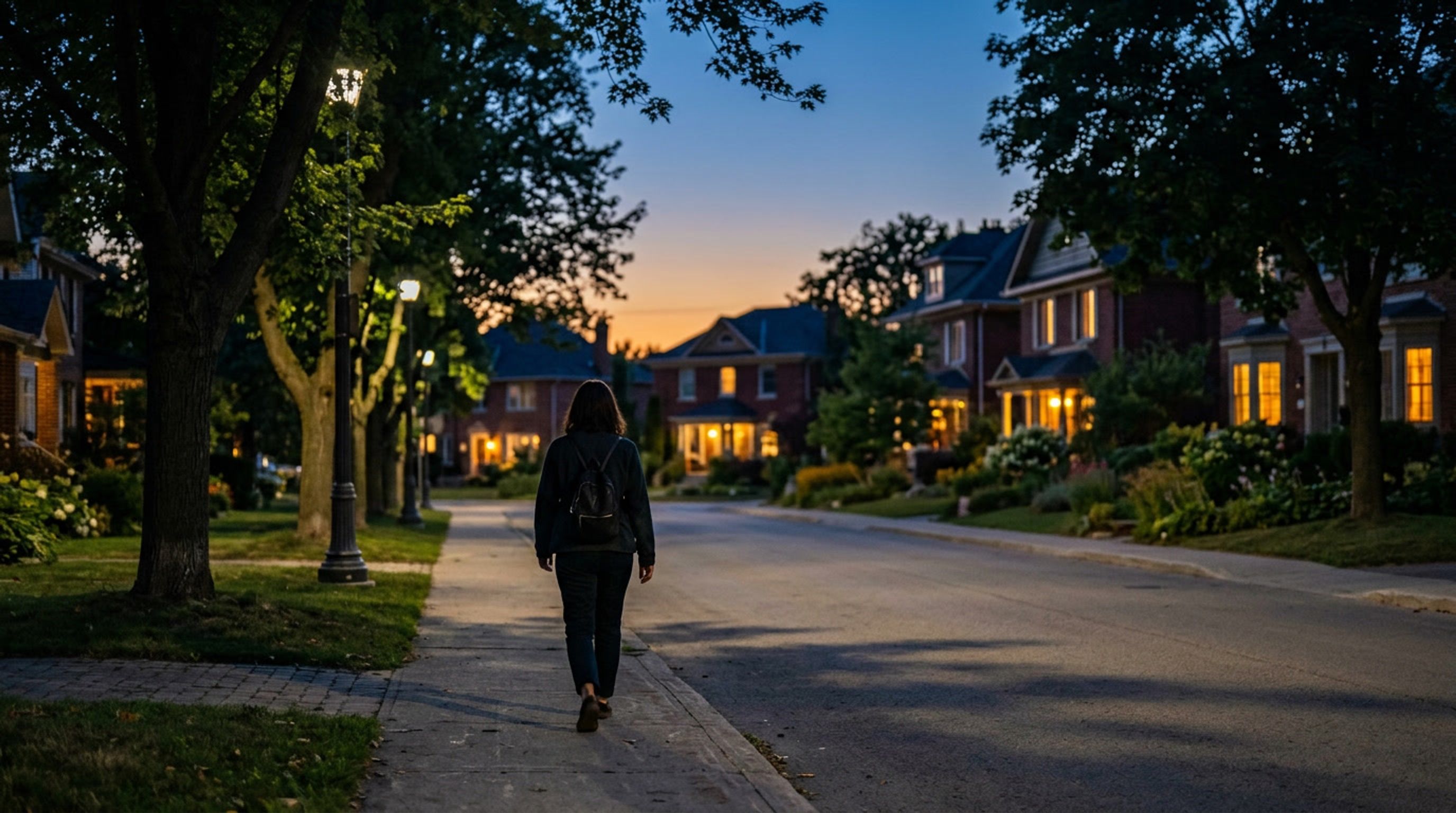
The plates are still on the table. The evening has that particular weight to it — full, warm, faintly heavy — and the couch is eleven steps away and has never looked better. You sit. Something goes on the screen. An hour later you're inexplicably flat, and by nine you're rummaging in the kitchen for something you don't want, and you put it down to a long day.
Maybe it was a long day. But some of that shape — the heaviness, the flatness, the odd late hunger — was decided in the ten minutes after you put down your fork.
This month's practice is the smallest one this column will ever run, and it has the strongest physiology behind it of anything in the first year.
The Practice
A ten-minute walk, starting within half an hour of finishing your largest meal.
Not exercise. A walk. The pace at which you'd move through a grocery store, or around the block with someone you're talking to. If you're breathing hard, you've misunderstood the assignment.
That's the entire intervention. No equipment, no clothes to change into, no route. Around the block, up and down the street, or fifteen laps of a hallway if the weather has opinions.
The only variable that matters is when.
Why It Works: Two Mechanisms
Muscle takes sugar out of the blood without asking permission
After a meal, particularly one with meaningful carbohydrate in it, glucose enters your bloodstream and rises toward a peak — typically somewhere in the region of half an hour to an hour later. Insulin comes out to meet it and ushers that glucose into cells. That's the normal cycle, and it works.
What's interesting is that contracting muscle has a second, separate route. When muscle fibres are working — even gently — they pull glucose out of circulation through a mechanism that doesn't depend on insulin at all. It's a side door. And it's open whenever the muscle is moving.
So a walk timed to arrive during the rise flattens the peak, because your legs are quietly removing glucose at the exact moment there's a surplus of it. Do the same walk three hours later and the surplus has gone; there's nothing to intercept. This is why the timing carries almost all the weight and the intensity carries almost none. Ten easy minutes in the window beat forty hard ones outside it, for this particular purpose.
The couch is a decision that makes the next decision for you
The second mechanism is behavioural, and it's the one this column keeps circling.
The post-meal moment is a hinge. Whatever you do in the ten minutes after dinner tends to set the shape of the whole evening — not because of willpower, but because of momentum and position. Sitting down on the couch with a full stomach doesn't just start an hour of screen time; it makes every subsequent transition harder, because you now have to get up to do anything else.
A walk inverts that. You end it standing, outside your own front door, already in motion, with the meal behind you rather than sitting on top of you. The evening that follows a walk and the evening that follows a collapse are different evenings, and the difference was ten minutes wide.
The friction is the feature, again — except here the friction is removed rather than added. You're not resisting the couch. You're simply not arriving at it first.
What the Evidence Actually Says
Strong. Light walking after eating reduces the post-meal rise in blood glucose compared with sitting. This is one of the more robustly replicated findings in exercise physiology, it holds at genuinely short durations, and it's been shown repeatedly across different populations. The underlying mechanism — insulin-independent glucose uptake by contracting muscle — is well characterised and not in dispute.
Strong. Timing matters more than intensity for this specific effect. Trials comparing walks placed shortly after meals against a single longer walk elsewhere in the day have found the shorter, better-timed bouts do more for glucose control across the day.
Reasonably supported. Light movement appears to modestly speed gastric emptying, which likely accounts for some of the subjective sense of sitting less heavily after a walk. Worth noting the inverse: vigorous exercise on a full stomach tends to do the opposite, which is one more argument for keeping the pace conversational.
A stretch, and I'd avoid it. Extending any of this into claims about weight, long-term disease risk, or the walk substituting for actual exercise. The glucose finding is about hours, not decades. It is a real effect on a real mechanism, and it is also a ten-minute walk — those two things can both be true. If you want the cardiovascular and strength benefits of exercise, this isn't that, and dressing it up as that would be the exact kind of overreach this column exists to avoid.
The honest summary: a short, easy, well-timed walk does one specific physiological thing very reliably, and one behavioural thing quite well. Neither of those things is dramatic. Both of them are free.
The Protocol
Pick the meal, not the time. Attach the walk to your largest meal of the day rather than to a clock. For most households that's dinner, and dinner is also where the couch problem lives, so it does double duty.
Leave before you sit. The single highest-leverage instruction in this issue. Once you're seated, the walk requires a decision; if you go straight from the table, it requires none. Shoes by the door, if that helps.
Keep the pace embarrassing. Genuinely slow is fine. The mechanism doesn't care. If you find yourself treating it as a workout, you'll start skipping it on tired days, and tired days are most days.
Take a person or take nothing. A walk with someone is the most durable version. A walk alone with no headphones is the second — and if you're building on the last two issues, it's the same empty ten minutes, in a different form. Podcasts are permitted. They're just a different practice.
Ten minutes is the floor, not the target. Some evenings it turns into twenty-five because the conversation was good. That's a bonus, not the standard. The standard is that it happened.
What success looks like at thirty days: you notice the evenings feel different — less of the heavy flatness, less of the aimless nine o'clock kitchen visit. It's a subjective measure, which is why I'd write one sentence about the evening on a handful of nights, walked and not walked, and compare. You'll know within a month.
What This Won't Do
It won't make you fit. It won't manage a diagnosed condition, and if you're living with diabetes or taking anything that affects blood sugar, this is a conversation to have with your clinician rather than a blog — the effect is real enough that it can interact with what you're already doing, which is precisely why it's worth raising with someone who knows your numbers.
It also won't fix a dinner eaten at nine-thirty, a schedule with no give in it, or a body in genuine pain. Some evenings the couch is the correct answer and the walk is a bad idea.
What it offers is narrower and, I think, underrated: the smallest possible intervention placed at the exact moment it does the most, and an evening that starts with you standing up rather than sinking down.
Ten minutes. Same ten minutes you'd have spent deciding what to watch.
The Monthly Measure runs once a month. Each issue takes one practice, examines what's actually underneath it, and gives you something to try.
From the Steep Shelf
A few tools, teas, and staples we use (or would use) to support the ideas in this article.
Some links on this page are affiliate links. If you buy something through them, we may earn a small commission at no extra cost to you. We only recommend products we have used or genuinely believe in.
Written by
Terra
Health writer focused on circadian biology, nervous system regulation, and sustainable performance for independent workers.
Continue reading

The First Sniffle: What Actually Helps at the First Sign of a Cold
What actually helps at the first sign of a cold, sorted honestly: the timing rule that gives zinc its power, honey's quiet win, and the two days that decide the rest.

Breathing Room: 5-Minute Evidence-Based Rituals for the Workday
Discover how five minutes of intentional breathing can shift your physiology and mental clarity between meetings, backed by clinical research.

Morning Light: The Simple Daily Reset for Better Energy and Sleep
Discover how a few moments of morning sunlight can naturally amplify your wake-up signals and set the stage for a restful night. A gentle, evidence-based guide to aligning your rhythm.