Paper Before the Prompt
A ten-minute page before the screen: a small, evidence-aware practice for finding your own position before asking a tool to think with you.
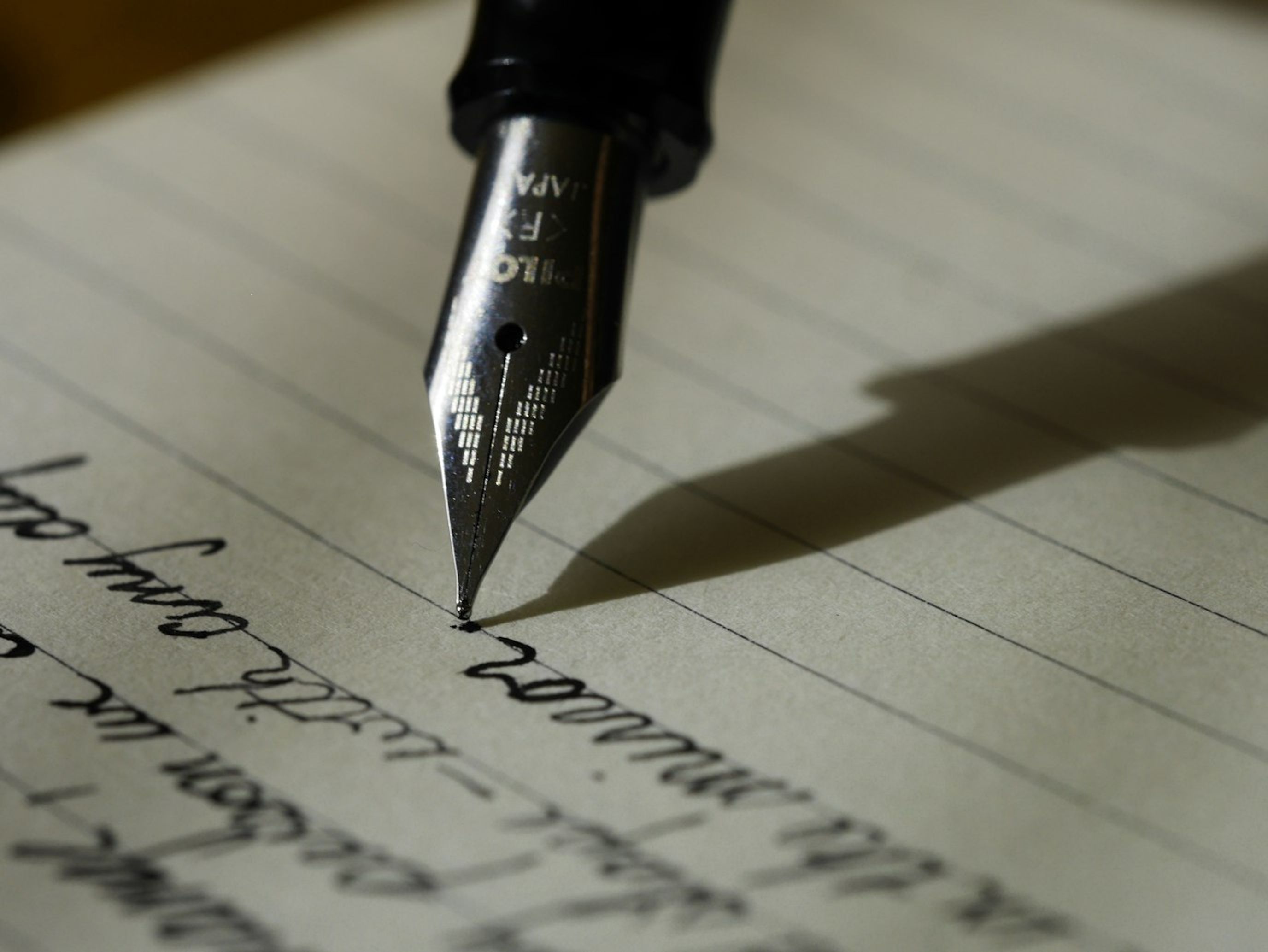
Open your most recent conversation with an AI assistant and read your first message. Then answer one question honestly: had you finished thinking when you typed it?
For a lot of us, the answer is no. That first message was a flare fired at a blank page. You didn't yet know what you thought about the problem, so you asked something else to think first, and within seconds there were three tidy paragraphs and the discomfort was gone. It felt like progress. What actually got skipped was the least comfortable and most useful part of the work: deciding what you believe before anyone offers an opinion.
Issue 04 gave your workday an ending. This issue gives your thinking a beginning.
The Practice
Before you open a screen for any task that needs a decision, a draft, or a plan, spend ten minutes handwriting on it. Then use whatever tools you like.
- Write the question at the top of the page, in one line. "Should I hire the contractor?" "What is this proposal actually claiming?"
- Set a timer for ten minutes.
- Write until it rings. Fragments, arrows, half sentences, and a doodle in the margin all count. The pen keeps moving. The page does not need to fill.
- Stop when it rings, even mid-thought. Now you may open the keyboard or the chatbot, and you carry the page with you.
The one variable that matters is order. Paper goes first. It is not paper instead of anything, and it is not paper as penance.
This is not journaling, not a ban on AI, and not a productivity system. There is nothing to keep. The page can go in the recycling.
Why It Works
The physical layer
You understand and remember ideas better when you produce them than when you are handed them. This is called the generation effect, and its close relative is what memory researchers call desirable difficulty: the effortful, slightly frustrating attempt to produce an answer is what makes the answer stick, even when your attempt is wrong. A blank page is a dependable way to trigger that effort. A chatbot is a dependable way to skip it.
Handwriting adds two smaller things. It is slower than typing, so you cannot transcribe your thoughts as they arrive. You have to choose which fragment is worth the ink. And a page holds what your working memory can't. Writing "I'm assuming the client wants the cheaper option" moves the assumption out of your head and onto a surface where you can look at it and test it. A great deal of feeling stuck is several unexamined assumptions occupying the same mental space.
The behavioral layer
The blank page is the hard part, and it is the part nearly everyone escapes. This isn't laziness. A cursor and a chatbot dissolve the discomfort in three seconds, and nobody out-willpowers a three-second exit.
Ten minutes on paper works because it removes the decision. Every earlier attempt you've made to "think it through first" required you to decide, minute after minute, to keep sitting in the discomfort. This one doesn't. The timer isn't done. That's all.
The friction is the feature. There is no autocomplete, no undo, and nobody to answer. The blankness that makes you reach for a prompt is the same blankness that forces you to produce something of your own. Like the shutdown sequence in Issue 04, the practice also has a terminal act, the bell, so it can end. And like the steep in Issue 01, it can't be hurried. Same shape as the rest of the column: a bounded sequence that does the job willpower keeps failing at.
The Evidence, Honestly Weighted
Strong. Producing your own answer before you see one improves learning and memory compared with simply receiving it, and failed attempts still help. This is the generation effect and desirable difficulty, both well replicated with the mechanism understood. Note what it says: generate. It does not say generate with a pen.
Reasonably supported. Handwriting versus typing. A widely cited 2014 study from Princeton and UCLA found that students who took notes longhand did better on conceptual questions than students who typed, probably because typists transcribed word for word. Later replication attempts found a smaller effect, and sometimes none. A small EEG study of students in Norway found broader connectivity across brain regions during handwriting than during typing, which fits the idea but says nothing about whether the resulting ideas were better. I'd call the pen's advantage over a keyboard real but modest.
Suggestive, with an honest asterisk. Starting from your own draft may make you less likely to anchor on a machine's first answer. Anchoring on the first number or option you see is well documented. That people anchor on AI output specifically, and that paper-first is a useful defense, is an extrapolation. I'm not aware of a study that tests it directly.
A practice, not a finding. The sequence itself (question at the top, ten minutes, timer, then screen) is my arrangement of supported principles. Nobody has studied it as a whole, and ten minutes is my number, not a threshold.
A stretch, and I'd avoid it. Three claims travel with this practice, and I won't make any of them. That paper makes you harder to replace, or protects what is "irreducibly human." That famous thinkers worked on paper, so it must work. Darwin and da Vinci are biography and survivorship, not evidence, and paper was what they had. And that doodling lowers stress hormones. The studies I know of were small and involved art-making sessions, not margin scribbles during a work problem.
The claim that survives is this: producing your own first attempt before you consult anything else improves understanding, and a timed page is a dependable way to force it. That is smaller than the usual version, and better supported.
The Protocol
Keep the pen moving until the timer ends. This is the highest-leverage instruction. Everything else is decoration. If you have nothing, write "I have nothing." That is a legitimate line, and the next one usually shows up.
Anchor it to something that already happens. Pick one moment: the first cup of tea before you open the laptop (a pot of tulsi works, and we have a piece on it), or the Monday planning block. Attach the ten minutes there. Do not invent a new slot.
Write the question first. One line, at the top. A vague page produces vague thinking.
Hand off deliberately. When the timer rings, ask what the idea needs next. If it's still fragile, keep going on paper. If it needs structure, use the keyboard. If it needs pushback, bring in the AI, and open with your position ("I think X because Y, push on that") instead of a bare request.
Don't stack it. No dedicated notebook, no color-coded pens, no template, no second page in the evening. Scrap paper and a timer. A practice that needs six supporting purchases is a production, and productions get cancelled the first hard week.
Lower the bar on bad days. The question plus three lines, two minutes, still counts. Zero doesn't.
At thirty days, repeat the opening test. Open your last dozen conversations with an assistant. Success is observable: on most working days you have a page in the recycling, your first messages contain a position you'd already written down, and you can state your view on a live problem in two sentences before you open anything.
The Honest Ceiling
Ten minutes on paper won't tell you what you don't know. It will show you where the gaps are, which is a smaller and more useful thing. It won't fix a workday where decisions are handed to you with no time to think, and it isn't an argument against speed: when a task is routine, letting the tool draft first is often the right call. This practice is for the problems where your own view matters.
It also isn't a way to work through whatever the fog is. If your pages keep filling with the same dread, or you're dealing with persistent anxiety, low mood, or worry that isn't tied to a task, the page is the wrong tool. Talk to a licensed therapist or your doctor. I'd rather you close this issue and make that call than write your way around it.
What the practice does give you is narrow and real: ten minutes a day in which the first thought in the room is yours.
Sources
Mueller, P. A., & Oppenheimer, D. M. (2014). The pen is mightier than the keyboard: Advantages of longhand over laptop note taking. Psychological Science, 25(6), 1159-1168. https://doi.org/10.1177/0956797614524581
Van der Weel, F. R. R., & Van der Meer, A. L. H. (2024). Handwriting but not typewriting leads to widespread brain connectivity: A high-density EEG study with implications for the classroom. Frontiers in Psychology, 14, 1219945. https://doi.org/10.3389/fpsyg.2023.1219945
The Monthly Measure runs once a month. Each issue takes one practice, examines what's actually underneath it, and gives you something to try.
From the Steep Shelf
A few tools, teas, and staples we use (or would use) to support the ideas in this article.
Some links on this page are affiliate links. If you buy something through them, we may earn a small commission at no extra cost to you. We only recommend products we have used or genuinely believe in.
Written by
Terra
Health writer focused on circadian biology, nervous system regulation, and sustainable performance for independent workers.
Continue reading

A Sunday Wind Down Ritual: Designing the Threshold into the Week
Transform Sunday night anxiety into a peaceful transition. Learn how a consistent wind down ritual helps your nervous system bridge the gap between weekend rest and Monday morning.

The Meal You Don't Remember Eating
One meal a day, eaten without a screen, from a plate, sitting down. What attention does to appetite and why memory of eating shapes what you eat next.

The Four Minutes You Can't Sit Through
The Monthly Measure runs once a month. Each issue takes one practice, examines what's actually underneath it, and gives you something to try.